
Nutritionist guidance for Finland
Every meal holds the day
You do not need a new list of foods. You need a rhythm. Meals at steady times, plants holding most of the plate, fish most weeks, dessert moved out of the late evening.
What the routine asks of you: three steady meals, one planned afternoon snack, fish two to three times a week.
Why timing comes before ingredients
Ateriarytmi is the Finnish habit of eating at roughly the same times each day, and it is the foundation most other advice rests on. When meals move around unpredictably, hunger arrives at odd hours and the evening gets heavier.
Fixing the rhythm first makes every later change easier. Breakfast, lunch, an afternoon snack, and dinner at steady times is enough to begin — you do not have to change what is on the plate yet.

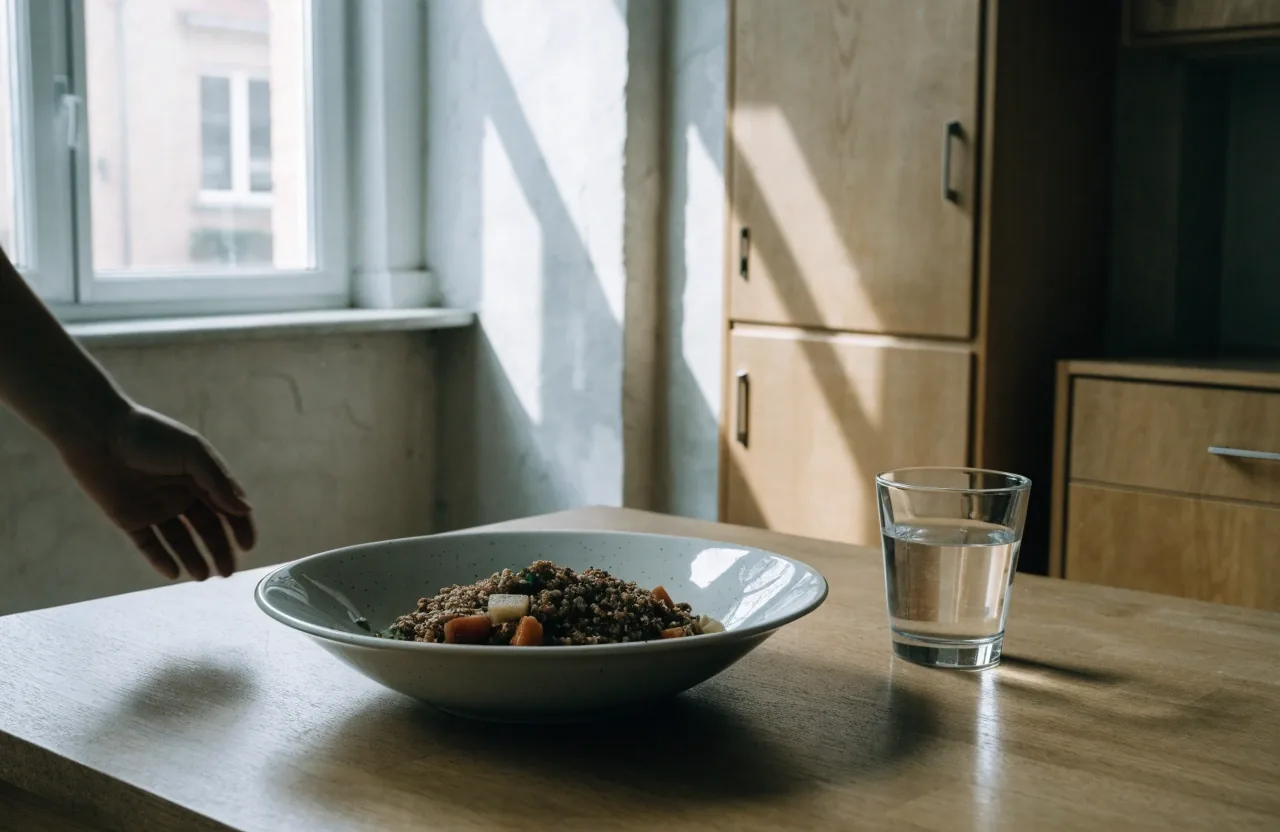
Keeping oats, berries, and a full carafe within reach is what makes a steady morning realistic on a working day.

A public facility runs on a fixed schedule — pool hours, sauna turns, quiet rooms. Eating the same way costs nothing and holds up in winter.
What Finnish guidance actually recommends
The national nutrition recommendations from the Finnish Institute for Health and Welfare set the framework for energy, nutrient intake, and food choices in Finland. They are written for professionals and for public-health work, which is why trend diets do not appear in them at all. The practical translation is familiar once you stop reading it as a rulebook.
Three habits that carry the rest
Fish two to three times a week
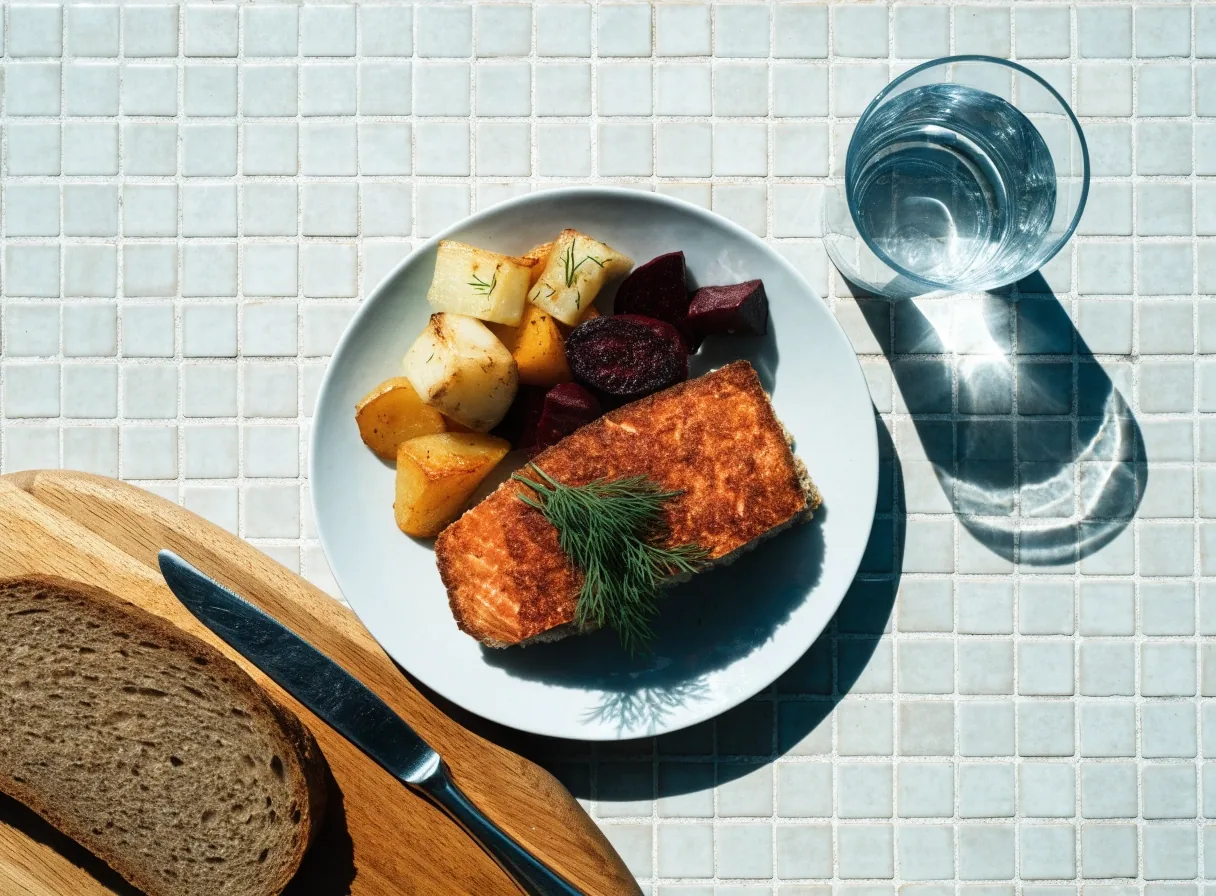
Finnish guidance places fish alongside plant foods as an important part of the diet. In practice that is roughly one fish lunch and one or two fish dinners — oily and lean both count, and frozen fillets are a reasonable option in a country where fresh supply varies. If fish is not part of your cooking yet, this is one habit worth building deliberately.
Täysjyvä as the default
Whole grains are one of the quieter recommendations in Finnish eating and one of the easiest to apply. Rye bread, whole-grain pasta, oats, and barley keep meals filling for longer than refined versions do. Switching the bread you buy is often the only change anyone makes — a small decision that repeats daily.
Kasviperäinen ruokavalio, without the strictness
A plant-forward diet in the Finnish sense is not veganism and does not require a label. Plants take the largest share of the plate, with fish and modest amounts of other animal foods alongside. Rye bread, oats, barley, potato, cabbage, root vegetables, and frozen berries all fit — and the pattern survives a busy week because it does not depend on special shopping.

Winter changes the light, not the structure. Regular meals and a set afternoon snack are what make the cold months easier to carry.
Jälkiruoka välipalaksi: dessert as a snack
Finnish lifestyle advice suggests saving dessert for a snack if you want to manage evening eating. The idea is simple: a sweet item earlier in the afternoon is easier to accommodate than one after a late dinner, and lighter evenings tend to be easier to digest.
Moving dessert is not restriction — it is placement. The same portion, put somewhere the day can absorb it. It also connects what you eat to next-day energy, which is the part most people notice first.
Building a plate when you eat out
Lunch is often the main cooked meal in Finland, which makes canteen and workplace lunches worth planning around. Look for the vegetable side first, choose the fish option when it appears, and take the whole-grain bread.
Portion size matters less when the base of the plate is plants. These choices take seconds in a lunch line, and they repeat five times a week — which is where the real leverage sits.

Canteen lunch is the one meal most Finnish readers can shape without changing anything at home.
Where supplements fit, and where they do not
Most nutrient needs are met through food, and supplements are not a substitute for meal structure. Vitamin D is the clear seasonal exception in Finland, and Finnish winter guidance addresses it separately because sunlight is limited for a large part of the year.
Beyond that, adding pills to a chaotic eating pattern rarely changes how the day feels. The order that works: fix the rhythm, then consider whether anything specific is actually missing.
If you eat oily fish twice a week, get daylight in summer, and keep meals regular, the food side of this is largely covered. Vitamin D is the one item worth asking a professional about for your own situation.
Plan for the low-light seasonQuestions readers send us
Three things come up more than any other. If yours is not here, the editors answer questions by email on weekdays.
What does THL recommend for fish, vegetables, and meal rhythm?
Finnish national guidance places vegetables and plant foods at the base of the diet, with fish two to three times a week, and it supports eating at fairly regular times rather than skipping meals and compensating later in the day.
Do I need to give up dessert?
No. Finnish lifestyle advice often suggests moving dessert earlier in the day as an afternoon snack, which keeps late meals lighter and easier to digest, and it leaves the evening free of a second heavy sitting.
Is a plant-forward diet expensive in Finland?
It tends to be cheaper than a meat-centred one. Oats, rye bread, potatoes, cabbage, root vegetables, and frozen berries are among the most affordable items in Finnish shops, and they are also the ingredients this pattern leans on most.
Build your daily meal rhythm
Start with the four eating times, hold them for a fortnight, and change the plate after that. If you would rather have the timing part checked against your own week, the editors read every message sent on weekdays.
Body Vitality Habits · Keilaranta 1, 00100 Helsinki · [email protected]